For contractors that subcontract portions of their projects, creating bid packages is a major undertaking during the preconstruction phase and can directly affect project cost and risk.
Each bid package may include a host of exhibits covering safety requirements, labor requirements, insurance terms, site rules, documentation procedures, reporting expectations, access requirements, or other project and contract obligations. These exhibits help define what subcontractors need to understand, price, and follow when they bid and perform the work.
Most of these exhibits are not written from scratch for every project. They mostly contain repeatable language that remains the same from project to project, so contractors usually store that language in templates and reuse it when preparing new bid packages.
But these exhibits are rarely static.
Even when most of the language is standard, the exhibit may still need to be adjusted for the project. Some terms may change because of the client. Others may change because of the jurisdiction, project type, delivery method, labor environment, funding source, or other project condition. A small amount of conditional language can still create risk if it is missed, outdated, copied from the wrong source, or left in when it does not apply.
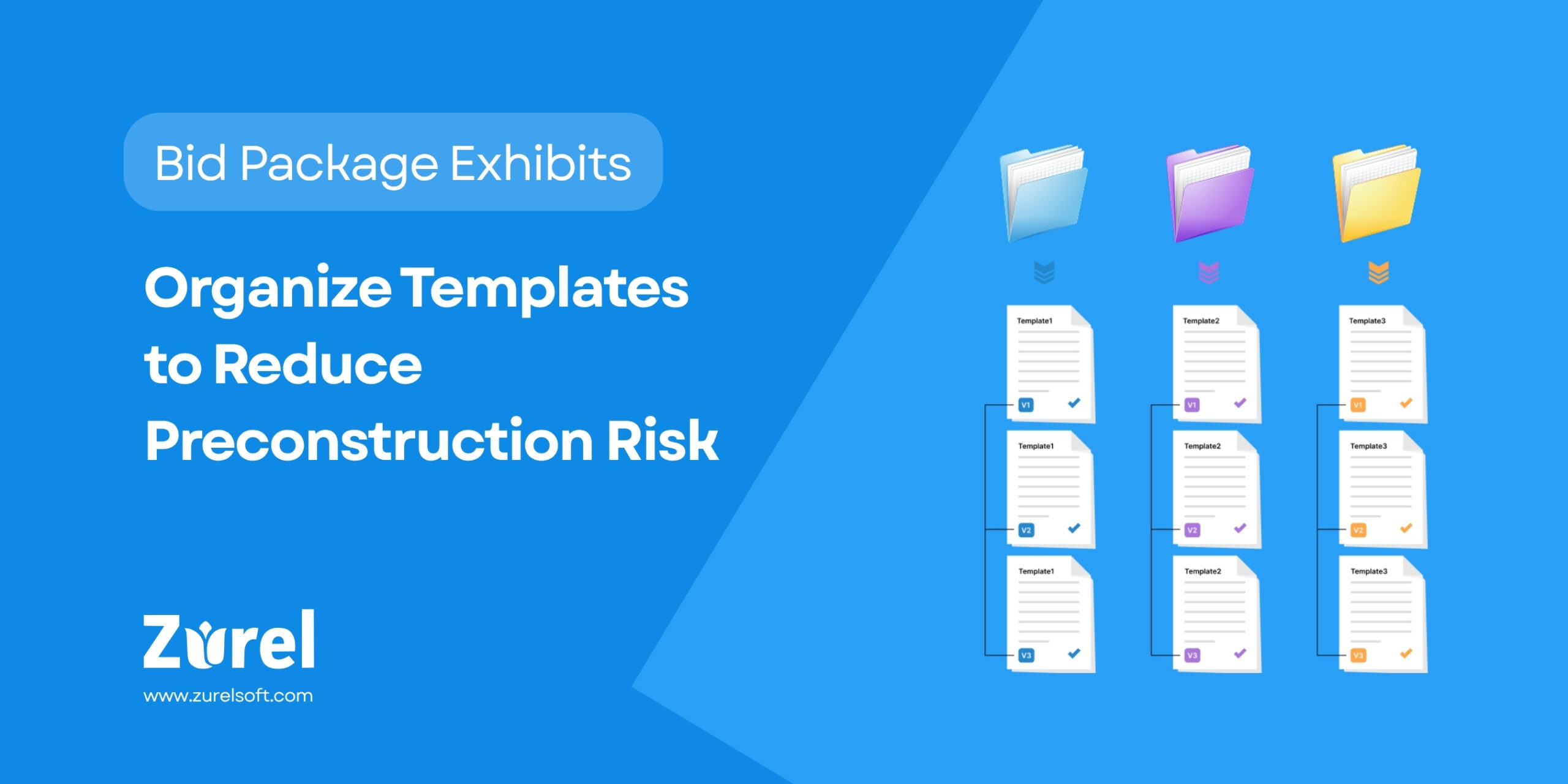
The challenge is to create a process and organize the templates so bid package exhibits can be created efficiently and with lower risk.
That requires more than saving a few Word documents in a shared folder. Contractors need a way to manage standard language, organize conditional language, guide project teams through the right choices, and make review easier before the bid package is issued.
The Three Types of Content Inside Exhibit Templates
To illustrate the template organization problem, consider three types of content that often appear inside bid package exhibits. These may not be the only types of content a contractor manages, but they show why exhibit templates need more structure than a single saved Word document.
1. Contractor-standard boilerplate language
This is the language the contractor wants to use across most or all projects.
It may include standard safety expectations, labor requirements, documentation rules, reporting procedures, site conduct requirements, insurance language, or other company-standard terms. This content usually makes up the majority of the exhibit.
Because this language is repeated across projects, it should be organized as controlled boilerplate content. The project team should not have to recreate it, search for it, or copy it from a previous project every time they prepare a bid package.
2. Conditional reusable language
This is language that is repeatable, but not universal.
It applies only when certain conditions are present. Each condition may bring its own set of requirements, terms, instructions, or obligations that need to be included in the exhibit. Those conditions may be tied to the jurisdiction, client, project type, delivery method, labor environment, market sector, funding source, or other recurring project characteristics.
For example, a contractor may have one set of language for California projects, another for Los Angeles public works projects, another for LAUSD projects, another for healthcare projects, another for union labor projects, another for design-build projects, another for federally funded projects, and another for projects with a repeat technology client.
This content should be managed separately from company-wide boilerplate because it should not appear in every exhibit. But it should also not be treated as one-off project language if the same condition is likely to repeat.
For a regional contractor, some conditional language may feel like standard boilerplate because it applies to most projects today. Even then, it is worth keeping it distinct. If the contractor expands into a new jurisdiction, starts working with new client types, or the condition no longer applies, the team will need to know which language is truly company-wide and which language applies only under certain conditions.
3. Project-specific language
This is language that applies only to one project.
It may include unique site conditions, owner requests, special coordination requirements, unusual access rules, temporary constraints, or other terms that do not yet repeat often enough to become reusable template content.
In the context of organizing exhibit templates, project-specific language is usually not the main focus. Because it changes from project to project, it is typically handled during project setup, exhibit review, or final editing.
However, project-specific language can become a source of reusable content over time. What starts as a one-time requirement for a new client, new jurisdiction, new project type, or new delivery method may later become conditional reusable language if the same condition begins to repeat.
For that reason, project-specific language should not be ignored. Teams should pay attention to whether a one-time requirement is likely to repeat. When it does, it should be pulled out of the project exhibit and organized as conditional reusable content for future bid packages.
The challenge for template organization is mainly with the first two content types: contractor-standard boilerplate language and conditional reusable language. These are the areas where contractors can create structure, reduce duplication, improve consistency, and make bid package exhibits easier to build and review.
Final Thought
Bid package exhibits are too important to manage through scattered files, copied project documents, and informal template habits.
Before contractors decide how to structure their templates, they need to understand what kind of content they are managing. Contractor-standard boilerplate language should stay consistent. Conditional reusable language should be organized so it can be found, updated, and used only when it applies. Project-specific language should be handled carefully and reviewed for future reuse when it starts to repeat.
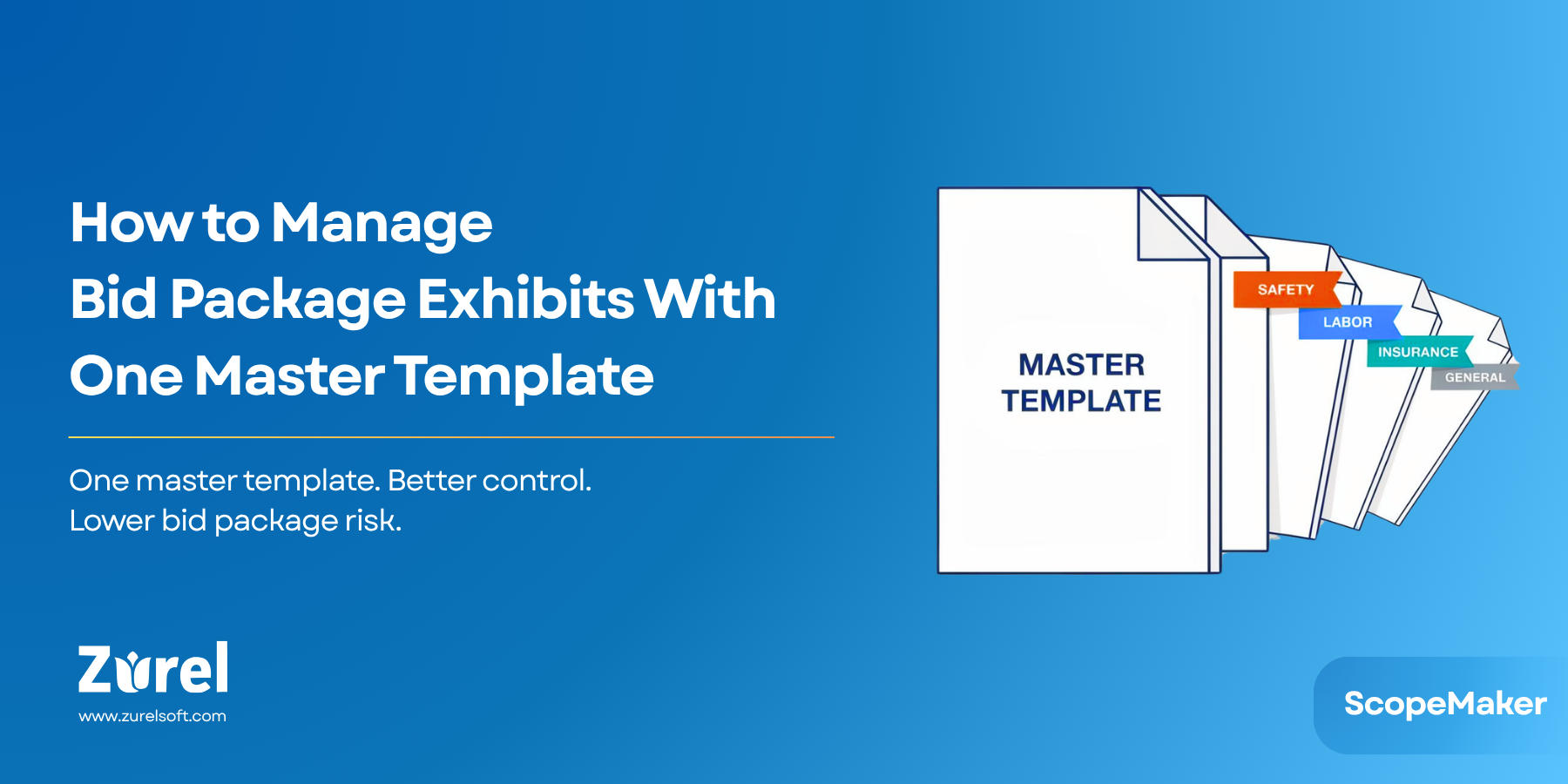
Once contractors understand the types of content inside bid package exhibits, the next step is choosing how to organize that content in templates. In the next post, we’ll look at four practical models: separate template versions, one master exhibit template, smaller reusable templates, and a hybrid model with grouped variation documents.
About Author